
A garage can turn against you slowly. One week it holds tools, sports gear, boxes, and a car; a few months later, it feels like a storage room that happens to have a door big enough for a vehicle. The smartest fix is not buying more bins or adding another shelf. It is rethinking Urban Garage Base design so the floor, walls, access points, and storage habits work together instead of fighting each other.
Many homeowners look at garage clutter as a weekend cleaning problem, but the deeper issue is usually poor structure. When every item has to compete for the same corner, even tidy people lose. A practical space improvement plan starts by asking what the garage must do every day, not what looks neat for one afternoon. That shift matters because better organization is not about perfection. It is about making the right action easier than the wrong one.
Urban Garage Base Changes That Start With the Floor
The floor tells the truth before anything else does. If you cannot walk from the entrance to the car without stepping around boxes, the garage is not organized; it is only holding things in a temporary truce. A strong layout begins at ground level because the floor decides movement, parking comfort, and how quickly clutter spreads.
Parking space layout that protects daily movement
A good parking space layout gives the car enough room without letting the vehicle swallow the entire garage. Many people park first and plan around whatever awkward scraps of space remain. That order causes trouble because every cabinet, ladder, bicycle, and storage tub then gets pushed into leftover zones with no logic behind them.
Start by measuring the car doors fully open, not half open. That one detail changes the whole plan. A sedan, SUV, or compact car may fit on paper, but daily use depends on whether you can unload groceries, open a child seat, or carry a toolbox without twisting sideways like you are sneaking through a crowded theater.
A cleaner parking space layout also reduces the urge to drop items behind the car. The back wall often becomes a dumping strip because it feels out of the way, yet it is one of the most valuable access points in the garage. Leave enough clearance for movement, and the whole space starts behaving better.
Floor zones that make clutter harder to ignore
Floor zones work because they remove guesswork. Instead of treating the garage as one open container, divide it into clear areas for parking, tools, seasonal gear, bikes, and overflow storage. This does not require painted lines, although tape or floor mats can help. The deeper win is mental: you know where something belongs before you set it down.
Storage zones should never begin with boxes. They should begin with use. Gardening tools near the outside door make sense. Car care supplies near the front wall make sense. Holiday décor can sit higher or farther back because you only touch it a few times a year. The mistake is giving prime space to things that rarely move.
The unexpected benefit is emotional. When the floor has defined storage zones, clutter feels out of place faster. A random chair, broken fan, or delivery box no longer blends into the mess. It becomes an obvious intruder, and obvious intruders get handled sooner.
Turning Walls Into Working Space
Once the floor has breathing room, the walls can finally do their job. Too many garages waste wall space because homeowners either underuse it or cover it with random hooks that solve one problem while creating five more. Wall planning should feel calm, not frantic.
Home garage organization that climbs upward
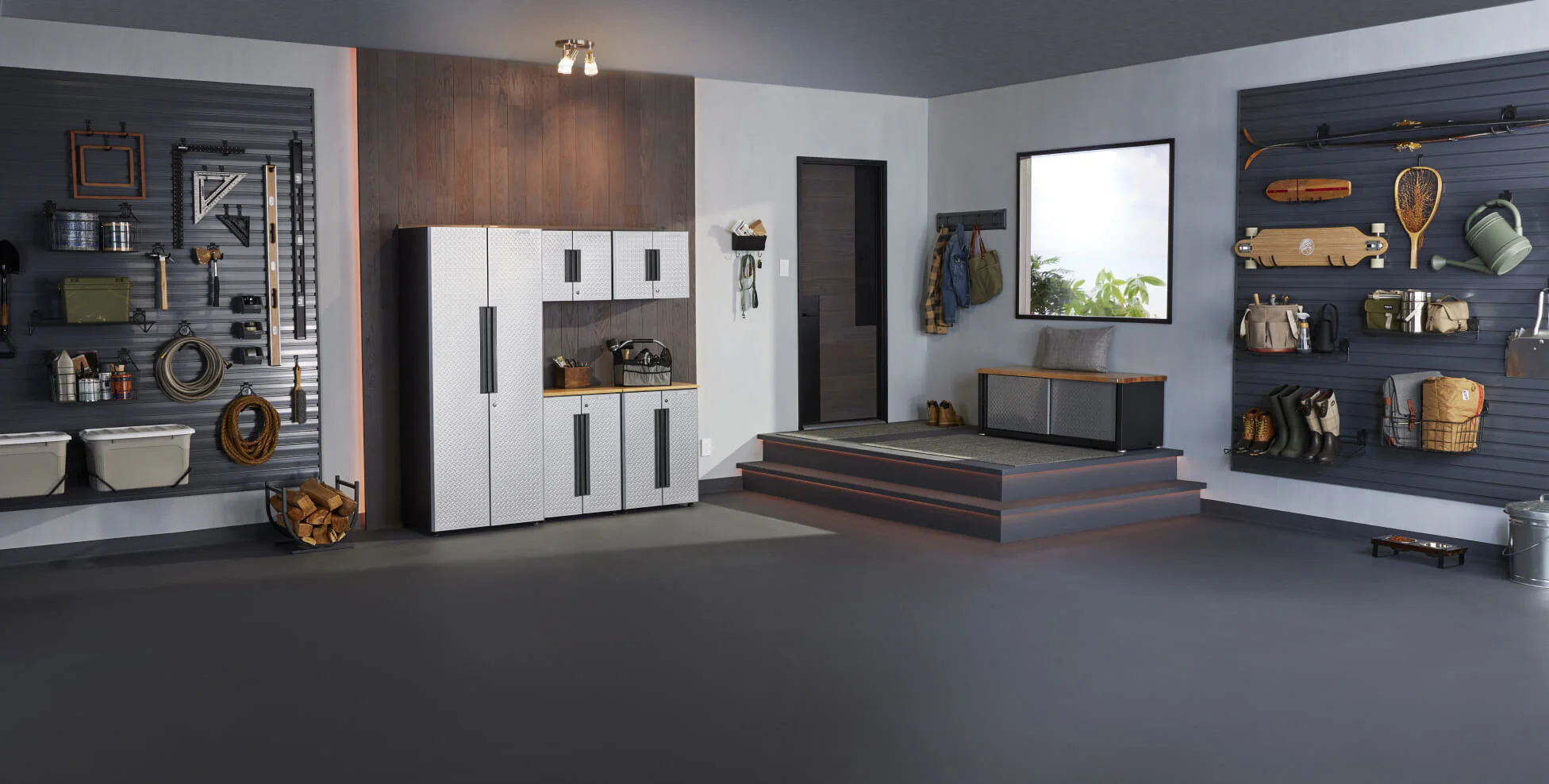
Home garage organization improves fast when you stop treating the floor as the only storage surface. Walls can hold tools, folding chairs, bikes, hoses, shelves, pegboards, and small cabinets. The floor should carry weight and movement. The walls should carry categories.
Vertical storage works best when the lowest wall sections hold frequent-use items. Hand tools, cleaning supplies, extension cords, and sports gear belong where you can grab them without dragging out a step stool. Higher shelves suit camping gear, winter items, spare materials, and labeled containers that do not need weekly attention.
The trap is overloading the walls until the garage feels like a hardware store aisle after a storm. Good home garage organization leaves blank space on purpose. Empty wall space is not wasted. It gives your eyes a resting point and gives your future self room to adjust when life changes.
Tool placement that respects real habits
Tool storage fails when it reflects fantasy instead of behavior. A perfect pegboard means nothing if the hammer always lands on the workbench because that is where you finish using it. The right system studies your habits and then improves them gently.
Place the most-used tools within arm’s reach of the work area. Keep specialty tools grouped by project type, not by size or shape. Electrical items, painting supplies, car tools, and repair basics each deserve their own small zone. That way, you do not search through plumbing tape when you need a socket wrench.
A small open tray can outperform a closed drawer for items used every day. That sounds messy to people who love hidden storage, but visibility saves time. The goal is not to hide every object. The goal is to make the correct return path so obvious that laziness has fewer chances to win.
Storage Choices That Fit Real Garage Life
After the walls and floor begin working together, storage decisions become easier. The problem is not that homeowners lack storage products. The problem is that most garages contain storage products bought during frustration, not planning. A bin bought in panic usually becomes another object to manage.
Garage planning around frequency, weight, and risk
Garage planning should sort items by how often you use them, how heavy they are, and what damage they can cause. Paint cans, fuel containers, sharp tools, and heavy equipment need more care than beach towels or plastic décor. Treating every item the same creates hidden risk and daily annoyance.
Heavy items belong low. Light seasonal items can go high. Chemicals need stable shelves away from heat, children, pets, and random impact. This sounds plain, but many messy garages break these rules every day because the owner was trying to “make space” rather than build a safe arrangement.
Better garage planning also means refusing to store certain things in the garage at all. Paper files, delicate fabrics, and heat-sensitive items often age badly in garages. The best storage decision is sometimes removal. A garage becomes more useful when it stops pretending it can protect everything.
Containers that reveal instead of conceal
Closed bins can help, but they also hide guilt. A dark plastic tote with no label becomes a small mystery box, and mystery boxes multiply. Clear containers, bold labels, and category-based shelves keep storage honest. You should know what is inside without opening three lids and muttering at yourself.
Labels should use plain names, not clever systems. “Car wash,” “Garden gloves,” “Dog travel,” and “Winter lights” beat vague labels like “Miscellaneous” or “Household.” A vague label is clutter wearing a name tag. It gives you permission to avoid a real decision.
Containers also need limits. When the sports shelf is full, you decide what leaves before anything new enters. When the tool drawer cannot close, you sort it before buying another organizer. A container without a limit becomes a hiding place, and hiding places are where organization goes to die.
Daily Systems That Keep the Garage Organized
A garage does not stay organized because you had one intense cleaning day. It stays organized because the daily system is easier to maintain than the mess. This is where many people lose patience, but it is also where the biggest long-term gains appear.
Small resets that prevent weekend disasters
Small resets beat rare cleanouts. Five minutes after a project can save two hours on Saturday. Put tools back before closing the garage door. Break down delivery boxes before they form a cardboard wall. Sweep the entry path before dirt gets tracked into the house.
The reset works because it happens while the mess is still small. Waiting turns simple decisions into a negotiation. You start asking whether to keep, move, donate, fix, or ignore each item, and suddenly the garage feels like a courtroom full of evidence.
A weekly reset also helps storage zones stay honest. Look for items sitting outside their assigned areas. Those items are signals, not failures. Either the item needs a better home, or the zone is not placed where real life wants it. Adjust the system instead of blaming yourself.
Better Organization that survives busy seasons
Busy seasons expose weak systems. School sports, home repairs, winter prep, summer travel, and holiday storage all pressure the garage in different ways. Better Organization survives because it has flexible space, not because every inch has been packed with rigid perfection.
Leave one open shelf or floor section for temporary items. This “landing zone” gives you a place for returns, donations, project supplies, or bulky purchases that need attention soon. Without it, temporary items land wherever they can, and temporary often becomes permanent.
The best long-term habit is a simple entry rule: nothing enters without a destination. If an item has no place, you choose one, remove something else, or decline the item. That rule may feel strict at first, but it protects the garage from slow collapse. Your future self will not miss the clutter you refused to adopt.
A garage that works well is not a luxury. It changes how you leave the house, return home, repair things, store supplies, and move through busy days without irritation. The strongest Urban Garage Base improvements come from decisions that make daily use calmer: clear floor paths, honest storage zones, smart wall use, safer containers, and reset habits that do not demand heroic effort. You do not need a showroom garage. You need a garage that stops wasting your time and starts supporting the way you live. Choose one zone today, clear it fully, give every item a real home, and let that small win become the new standard.
Frequently Asked Questions
What are the best urban garage base ideas for small garages?
Start with the floor path, parking clearance, and wall storage before buying containers. Small garages improve fastest when you protect movement first, then move low-use items upward. Clear bins, labeled shelves, and one open landing zone help the space stay practical.
How does garage planning improve better organization?
Garage planning forces every item to earn its place. You sort by use, weight, safety, and access instead of dropping things wherever space appears. That approach reduces clutter because the garage has a working structure before storage products enter the picture.
What storage zones should every home garage organization plan include?
Most garages need zones for parking, tools, car care, seasonal storage, outdoor gear, and temporary items. The exact layout depends on your habits, but each zone should have clear boundaries so items do not drift into walkways or parking space.
Why is parking space layout important in a garage?
Parking space layout affects daily movement, safety, and storage access. A car that technically fits can still make the garage frustrating if doors cannot open comfortably. Planning around real entry, unloading, and walking space prevents clutter from gathering in tight areas.
How can I keep garage clutter from coming back?
Use short resets and firm limits. Put tools away after each project, break down boxes quickly, and keep one temporary landing zone for items that need sorting. Clutter returns when objects enter without a destination, so every item needs a clear home.
What is the easiest home garage organization change to make first?
Clear the main walking path from the house door to the garage door or vehicle. That single change improves safety, access, and motivation. Once movement feels easier, shelves, hooks, and containers become easier to place with purpose.
Are clear bins better for garage storage zones?
Clear bins work well because they show what is inside before you open them. Labels still matter, but visibility prevents forgotten items from piling up. Use clear bins for grouped categories and avoid oversized containers that become mixed clutter traps.
How often should I update my garage planning system?
Review the garage every season, especially before weather changes, school schedules, major projects, or holiday storage shifts. A short review keeps the layout aligned with real life. The goal is not constant rearranging; it is timely correction before clutter takes over.
