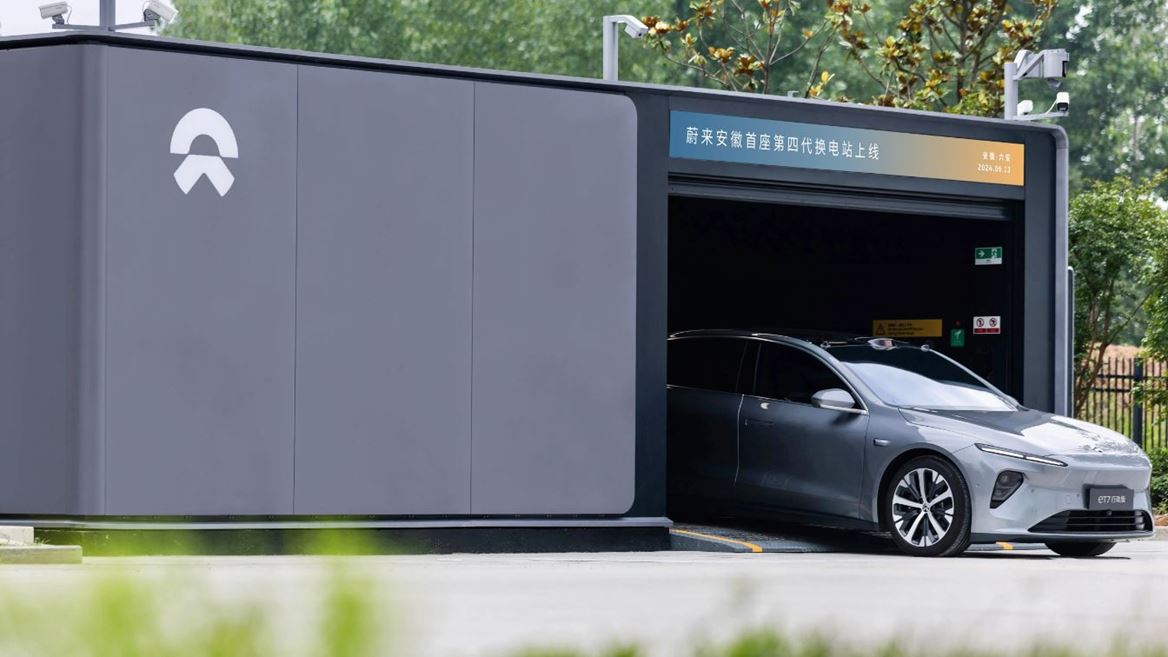
The future of EV ownership may not be a faster cable. It may be a car that stops, parks itself into a narrow bay, and leaves with a different pack beneath the floor. For American drivers watching from a market still built around plugs, the NIO ET7 battery swap station experience raises a sharp question: do we want faster charging, or do we want to stop thinking about charging at all? NIO says its Power Swap system can replace a pack in about three minutes, while U.S. guidance still frames Level 2 charging in hours and DC fast charging in under an hour for most battery-electric vehicles. That gap feels huge on paper, but the lived experience is not only about time. It is about trust, access, battery condition, road-trip habits, and whether the system exists where you drive. For a U.S. reader comparing electric vehicle ownership planning, the ET7 is less a normal shopping option and more a preview of a different deal between car, driver, and energy network. Coverage from outlets such as PR Network often matters because the story is bigger than a single sedan. It is about how convenience gets built.
Why NIO’s Swap Model Feels Different From Plugging In
The normal EV routine asks you to plan around the battery you own. You plug in at home, watch the state of charge, decide whether a public stop is worth the time, and hope the charger works when you arrive. NIO flips that routine. With EV battery swapping, the pack becomes less like a permanent organ and more like shared equipment moving through a managed network. That sounds odd at first. Then you picture a cold night, a low battery, and a full schedule.
The Driver Experience Is Closer to a Service Lane Than a Charger
A plug-in stop usually begins with small chores. You park close enough for the cable, open the app, handle payment, start the session, check whether the charger and car are talking, then wait. Sometimes it works cleanly. Sometimes the cable is stiff, the screen is frozen, or the charger is blocked by a gas SUV with no driver nearby.
A NIO swap stop feels more like entering a compact automated garage. The appeal is not only the three-minute claim. NIO says the process can happen while the driver stays inside, and every swap includes checks on the battery and electric drive system. That changes the mood. You are not babysitting a cable. You are being processed through a system.
For an American driver used to Tesla Superchargers, Electrify America stalls, or a grocery-store Level 2 charger, that distinction matters. Traditional EV charging still asks for patience, even when it works. Swapping asks for network trust. The tension moves from “How long will this take?” to “Is there a swap site near my route?”
The Hidden Win Is Battery Choice, Not Only Speed
The obvious benefit is speed. The less obvious benefit is flexibility. If the system allows different pack sizes under the same vehicle platform, the owner does not have to carry the biggest battery every day. That matters because a heavy long-range pack can be wasteful for a 22-mile commute in Dallas, Phoenix, or suburban New Jersey.
NIO has promoted the ET7 with a 150 kWh ultra-long-range pack and says the sedan achieved over 1,000 kilometers in a real-life range challenge. That sounds like a brag, and it is. Yet the smarter lesson is quieter: a driver may not need that huge pack every week. They may want it for a holiday trip, a winter highway run, or a stretch between rural chargers.
This is where NIO ET7 charging becomes more than a technical feature. It becomes a subscription-style energy habit. Americans already understand choosing a phone data plan or renting a pickup for one weekend. A swappable EV pack follows that same logic. Own the car. Access the battery that fits the day.
How the battery swap station Changes Road-Trip Pressure
Road trips expose the gap between theory and life. At home, nearly every EV can feel easy if you charge overnight. On the road, the same car can feel needy. You are not only moving from charger to charger. You are timing meals, bathroom breaks, weather, traffic, and the patience of everyone in the cabin.
Time Saved Is Real, but Queue Design Decides the Mood
NIO has said its third-generation Power Swap setup can handle up to 408 swaps per day and store up to 21 vehicle batteries at each site. That capacity number matters because a three-minute service can still feel slow if seven cars are waiting ahead of you. The machine may be fast. The line may not be.
Think about a family leaving Boston for a ski weekend in Vermont. A DC fast charger can work fine if they stop at the right point and the charger delivers strong power. But if the stalls are full, one broken unit can wreck the timing. A swap site has the same risk in a different form. If the site has enough charged packs and a good reservation system, the stop feels almost like a toll booth. If packs are depleted, the magic fades.
The counterintuitive part is that a plug may beat a swap on a relaxed stop. If you planned lunch anyway, a 35-minute charge while eating is not a loss. The swap wins when the stop itself is the problem. That is a narrower, more honest advantage than most headlines suggest.
Cold Weather Makes the Comparison Less Simple
Traditional EV charging gets harder in cold places because battery temperature affects charging speed. Drivers in Minnesota, Michigan, Colorado, and upstate New York already know the winter routine: precondition the pack, arrive warm, and avoid pulling into a fast charger with a cold battery and 8 percent left. A cable is not magic. The battery has to accept power.
A swap model can soften that problem because the replacement pack has been managed off the car. NIO says its swap sites centrally monitor batteries and include health checks, which points to a more controlled energy system than a random public charging stop. Still, this does not erase winter friction. The station has to maintain inventory, the site has to stay online, and the driver has to reach it.
This is why EV battery swapping is best seen as infrastructure, not a feature. A heated steering wheel can be judged inside the car. A swap network has to be judged across a map. For U.S. readers, the lesson is blunt: the best charging method is the one that exists where life takes you.
Where Traditional EV Charging Still Wins for American Drivers
A swap bay feels dramatic because it solves the public waiting problem. But most EV energy does not need drama. It happens while the car is parked. The garage, driveway, apartment lot, office, hotel, and curbside charger all matter more than a flashy stop on a highway video.
Home Charging Is Boring, Which Is the Point
The strongest case for traditional EV charging is not the fastest charger. It is the 240-volt home setup that fills the car while you sleep. The U.S. Department of Transportation says Level 2 charging can bring a battery-electric vehicle to 80 percent from empty in about 4 to 10 hours. That sounds slow until you remember the car is parked for the night.
A homeowner in Austin with a garage does not need a three-minute energy stop every morning. They need the car ready by 7:15. A Level 2 charger does that without a detour, a reservation, or a shared pack. It also keeps the routine private. No public stall. No station queue. No question about whether a compatible exchange system serves the neighborhood.
This is the quiet strength of NIO ET7 charging by plug, even in markets where swap sites exist. The best daily EV routine is the one you do not notice. Swapping is stronger for interruption. Home charging is stronger for rhythm.
Public Charging Is More Open Across Brands
Public chargers are messy, but they serve many brands. CCS, NACS, adapters, charging apps, and network rules still create friction, but the long-term American direction favors broader access. The Joint Office of Energy and Transportation points drivers to U.S. station data by charging level, access type, and site status, which reflects how public infrastructure is being organized around visibility and shared use.
Swapping has a tougher compatibility problem. The car has to be designed for the process. The pack shape, mounting points, cooling layout, software handshake, safety checks, and service rules all have to match. That is hard enough inside one brand. Across the U.S. market, with pickups, crossovers, luxury sedans, fleet vans, and different battery suppliers, it becomes a heavy lift.
The non-obvious lesson is that the slower system may scale across more lives. Traditional EV charging can be ugly at the curb and still useful. A swap network has to be tightly choreographed. That makes it elegant where it works and almost invisible where it does not.
What the ET7 Teaches the U.S. EV Market
The ET7 is not a normal showroom comparison for most Americans. It is a stress test for assumptions. U.S. buyers often ask how many miles an EV has, how fast it charges, and whether the nearest highway charger is reliable. NIO asks a different question: what if the battery were treated as part of the network instead of part of the car?
Battery Ownership May Matter Less Than Battery Access
American car culture has a deep ownership streak. People like knowing what belongs to them. That includes the battery, even though most drivers never see it, touch it, repair it, or measure its health beyond the dashboard estimate. A swap model challenges that feeling.
If a managed network keeps packs healthy, monitors wear, and gives you the right capacity for the trip, owning one fixed pack may feel less special. NIO has tied its swap approach to battery health monitoring, and its official materials frame the service as more than a quick refill. That is a meaningful shift. The value moves from the single battery under your floor to the system that keeps energy available.
For readers comparing long-distance EV road trip costs, this can change the math. A car with a smaller purchased pack and paid access to larger packs on demand could lower the buy-in price. It could also add subscription costs that annoy drivers later. The winner depends on pricing, coverage, and how often you travel beyond your daily loop.
The Best Future May Use Both Systems
The cleanest answer is not swap versus plug. It is both, used for different moments. Home charging covers daily life. Workplace and hotel charging cover parked hours. DC fast charging covers mixed-brand travel corridors. Swapping covers drivers who need fast turnarounds, battery-size flexibility, or relief from charger uncertainty.
That blended future would fit the U.S. better than a single grand solution. A rideshare driver in Los Angeles may value fast energy turnover. A rural family in Iowa may value home charging and a strong highway fast-charger every 80 miles. A luxury sedan buyer in San Francisco may care more about convenience than pack ownership. None of those drivers is wrong.
Traditional EV charging will remain the American backbone because it fits homes, parking lots, and many brands. EV battery swapping could still matter if fleets, luxury brands, taxis, or dense cities prove the economics. The ET7 shows the experience can feel calm and fast. The harder question is whether the business model can follow the driver across a continent-sized country.
Conclusion
The ET7 does not make plugs obsolete. It exposes where plug-based habits feel weak: public waits, broken stalls, winter speed drops, and the mental load of planning a trip around charge curves. For U.S. drivers, the NIO ET7 battery swap station experience is best read as a challenge to the current routine, not a direct replacement waiting around the corner. A three-minute swap sounds simple, but the simplicity depends on land, software, battery inventory, brand alignment, and enough drivers to keep the system alive. That is a lot to ask. Still, the idea has teeth because it treats time as part of the product. Traditional EV charging wins when the car is parked anyway. Swapping wins when stopping feels like failure. The smartest EV future will not worship one method. It will give drivers more than one good answer, then let the trip decide. Keep watching this space, because the next big EV improvement may happen outside the car.
Frequently Asked Questions
How long does a NIO battery swap usually take?
NIO says its automated Power Swap process takes about three minutes when the car is ready and the system is working as intended. Real-world timing can vary if there is a queue, a reservation delay, or limited charged pack inventory at that site.
Is EV battery swapping better than DC fast charging?
It can be better for short stops because the driver avoids waiting for the pack to charge. DC fast charging still wins on brand access, network growth, and flexibility. The better choice depends on route coverage, vehicle compatibility, and whether you can charge at home.
Can Americans buy the NIO ET7 in the United States?
The ET7 is not a common U.S. showroom option, so American shoppers should treat it as a comparison point rather than a normal buying choice. Its main value for U.S. readers is showing how premium EV ownership could change if swap networks arrived.
Does swapping an EV battery hurt long-term battery health?
A managed swap system may help battery health because packs can be checked, cooled, and charged under controlled conditions. The risk is not the act of swapping itself. The bigger issue is whether the operator manages pack wear fairly and tracks condition over time.
Why does traditional EV charging still matter if swapping is faster?
Most charging happens while a car is parked, especially at home overnight. Speed matters less when you are asleep, working, or staying at a hotel. Traditional EV charging also works across more brands, which makes it easier to expand across the U.S. market.
Is the NIO ET7 good for long road trips?
The ET7 is designed as a long-range premium sedan, and NIO promotes large battery options for extended travel. The road-trip experience depends on local infrastructure. In a strong swap region, it can feel easy. Outside that network, plug access becomes the main concern.
What is the biggest problem with EV battery swapping?
Compatibility is the hardest problem. Vehicles need matching pack designs, software, safety systems, and service rules. That is easier inside one brand than across many automakers. Without broad support, swap access can stay limited even if the technology works well.
Would battery swapping work well for U.S. cities?
Dense cities could be a good fit because many drivers lack private garages and cannot charge overnight. Taxis, rideshare cars, delivery fleets, and luxury commuters may benefit first. Suburban homeowners with Level 2 chargers may see less need for the service.
