A sharp metallic rattle on a highway on-ramp can make any driver ease off the gas. It may sound small at first, like coins shaking in a coffee can, but knock sensor symptoms often show up when the engine is working hardest, not when it is parked in the driveway. The sensor’s job is to hear harmful combustion noise before your ear does, then help the computer pull timing back to protect the engine. When that signal is missing, weak, or false, you may feel hesitation, hear engine pinging under load, see check engine light codes, or notice a sudden loss of engine power. For drivers comparing repair advice, warranty notes, and ownership guides from trusted auto resources like practical vehicle maintenance advice, the key is knowing which clues point to the sensor and which point to fuel, carbon buildup, misfires, or cooling trouble. A parts-store scan can start the conversation. It should not end it. The smartest move is to match the sound, the driving condition, and the code history before money leaves your pocket.
Knock Sensor Symptoms That Separate Sensor Trouble From Normal Noise
The hard part is that a bad reading does not always sound like a broken part. Sometimes the engine protects itself so aggressively that the car feels lazy, yet nothing dramatic happens. Other times the system misses real knock, and the sound appears only when you climb a grade, tow a small trailer, or merge into fast traffic on a hot day. That split is why owners often chase muffler rattles, transmission issues, or “bad gas” before the real pattern becomes clear. The pattern matters more than the volume. A faint ping at the wrong moment can tell you more than a loud buzz from a loose bracket. The clue is when it happens, how fast it fades, and whether the car feels weaker at the same time.
Why Engine Pinging Under Load Sounds Different From a Loose Heat Shield
Engine pinging under load has a tinny, fast, sparkly sound that rises when cylinder pressure rises. You usually hear it during acceleration, not while coasting. A loose shield can buzz at steady rpm, but pinging tends to arrive when your right foot asks for torque. It may last one second, then vanish when the transmission downshifts or you ease the pedal.
Think of a Phoenix commuter in a naturally aspirated midsize SUV. The vehicle runs fine on surface streets, then rattles for two seconds as it climbs an on-ramp in 106-degree heat. That short burst matters because knock often appears under heat, load, and low-rpm strain. The engine may feel normal before and after, which is why many drivers ignore it until the sound becomes easier to trigger.
The non-obvious part is this: silence does not prove safety. A failing sensor can cause the computer to pull timing early, which prevents audible noise but also drains response. In that case, you may feel the protection strategy more than you hear the combustion problem. A quiet engine that suddenly feels weak still deserves a scan, mainly if fuel mileage drops at the same time.
When Hesitation Feels Like a Transmission Problem
Drivers often blame the transmission first because the symptom lands through the seat, not through the ears. You press the pedal, the rpm climbs, and the car feels held back. It may even delay an upshift or hunt between gears because the engine is no longer making the torque the transmission expected. That makes the repair path muddy from the start.
That is why a knock-related issue can mimic dirty fluid, a slipping clutch pack, or a weak turbo. The computer may retard ignition timing to keep combustion pressure safe. The result can be a flat, rubber-band feel from 2,000 to 4,000 rpm, even though the gearbox is obeying commands. On some cars, the shift behavior changes because the engine load calculation has changed, not because the transmission has failed.
A better clue is repeatability. If the lag appears during warm acceleration, uphill driving, or passing, then fades at light throttle, the engine side deserves attention. Pair that with poor fuel mileage or a faint rattle, and the case grows stronger. Write down when it happens: cold or hot, low rpm or high rpm, regular fuel or premium, empty car or loaded trunk. Those notes can save diagnostic time.
What the Sensor Does When Combustion Gets Rough
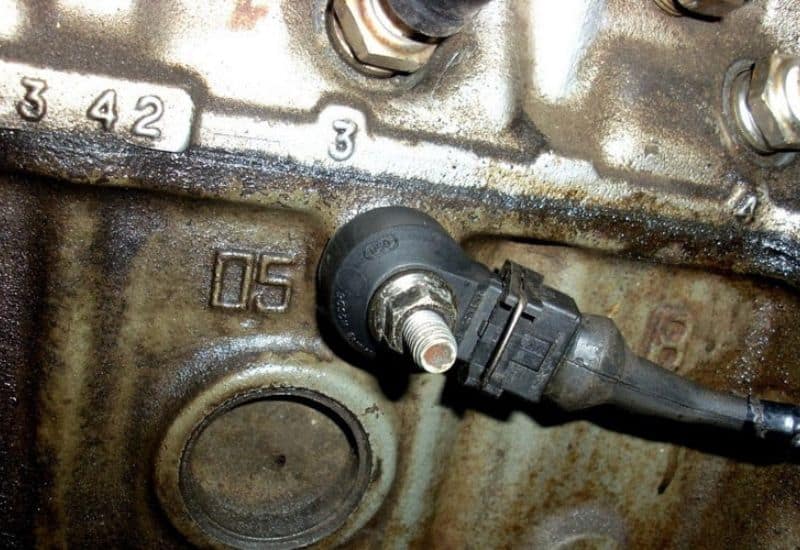
A knock sensor is not a magic microphone. It listens for a vibration pattern in the engine block and sends that information to the powertrain control module. The computer compares that signal with rpm, load, temperature, timing, and fuel data, then changes spark timing when it believes knock is present. That means the sensor is part listener and part witness. The computer makes the decision, but it depends on the quality of the witness. When the witness lies, the engine strategy changes in ways that feel strange from the driver’s seat. That is why one driver may hear a rattle, while another only notices a softer pedal.
The Computer May Remove Timing to Save the Engine
Spark timing is one of the quiet rulers of how an engine feels. Fire the mixture at the right moment and the piston gets a clean push. Fire it too early or allow abnormal combustion to hit the piston, and pressure arrives harshly. Fire it too late and the engine loses punch. You may not think about timing while driving, but your foot feels it.
When the knock circuit reports danger, the computer can pull timing back. That can prevent damage, but it can also create loss of engine power. The driver feels a dull pedal, slower acceleration, and sometimes hotter exhaust because the burn is happening later than the engine prefers. In a pickup climbing a grade with tools in the bed, this may feel like the truck suddenly gained weight.
Here is the part many owners miss. A false knock signal can punish a healthy engine. A loose bracket, worn mount, noisy accessory bearing, or damaged connector can send noise into the system. The computer may treat that noise like detonation and soften the engine even when the fuel burn itself is not the villain. That is why a good diagnosis checks the engine bay for extra noise before blaming the sensor.
Fuel Quality Can Hide or Expose the Fault
Fuel octane is not horsepower in a bottle. It is resistance to knock. If your owner’s manual calls for premium and you fill with regular, pinging may appear before any sensor has failed. If the vehicle only recommends premium, the story changes by model and driving conditions. The manual matters more than pump gossip.
A Denver driver with a turbocharged crossover may notice no problem during cool morning errands, then hear engine pinging under load during a summer road trip through Utah. Heat, boost, luggage, and long climbs ask more from the same fuel. A weak sensor or bad signal path may show itself only during that kind of stress. The same car may behave cleanly again after the weather cools, which can make the owner doubt what happened.
The counterintuitive move is not to keep buying higher octane forever. Better fuel can reduce noise, but it can also mask the evidence. If the scan data shows knock control activity, timing pulled back, or related trouble codes, the repair path should still include wiring, connector fit, sensor torque, and other causes of abnormal combustion. Fuel can be part of the story without being the ending.
Reading Codes Without Replacing the Wrong Part
A code gives direction, not a verdict. That is the difference between diagnosis and guessing. A scan result can point toward the knock sensor circuit, but the same complaint may involve fuel quality, misfires, carbon deposits, overheating, exhaust rattles, or a wiring fault buried under the intake. The best shops slow the process down before they speed the repair up. That feels less exciting, but it costs less than replacing parts in the dark. It also helps when a state emissions inspection is coming up, because a fresh code or unset monitor can turn a small repair into a failed visit. In many states, the light matters as much as the tailpipe because the onboard system is part of the inspection process.
Reading Check Engine Light Codes Without Guessing at Parts
Check engine light codes tied to this system often sit in the P0324 to P0334 range, depending on the vehicle and bank. A driver might see P0325 for a circuit issue, P0327 for low input, or P0330 for a second-bank circuit fault. Those labels help, but they do not prove the sensor alone is bad. They prove the computer saw a signal problem or control problem it could not ignore.
A shop should look for freeze-frame data first. That snapshot shows when the fault set: rpm, load, temperature, speed, and sometimes fuel-trim clues. If the code set at light throttle on a cold start, the story differs from a code that appeared during a hot uphill pull. A cold-start code may point toward wiring, moisture, or connector fit. A loaded uphill code may fit real detonation, fuel, or heat.
This is also where the cheapest repair can become expensive. On many V6 and V8 engines, the sensor may sit under the intake manifold. Replacing it without checking the harness, water intrusion, torque, or connector corrosion can mean paying twice for the same labor. A scan at an auto parts counter can tell you where to look. It cannot inspect a brittle connector hidden under plastic and heat-soaked rubber.
What a Careful Diagnosis Looks Like
A careful technician starts by asking what you felt. Was there pinging, rough idle, poor acceleration, or only a light? Then comes the scan: stored codes, pending codes, freeze-frame data, live timing, and knock retard values if the tool can see them. The better the story from the driver, the cleaner the test plan becomes.
Next comes the physical side. The tech checks the connector, wiring route, engine grounds, oil leaks, coolant leaks, and nearby noises. Some engines are known for water collecting around valley-mounted sensors. Others suffer from cracked connectors after years of heat. In the Rust Belt, corrosion can add another layer because road salt attacks grounds and brackets long before the sensor itself fails.
Testing may include tapping near the sensor area, not striking the sensor itself, and watching the signal response on a scan tool or scope. The goal is simple: prove whether the sensor can hear, whether the computer can receive, and whether the engine is making noise that should not be there. That order saves money. It also prevents the worst mistake, which is replacing a sensor while the engine keeps knocking for another reason.
Repair Choices, Costs, and Driving Risk
Once the pattern is clear, the next question is whether you can keep driving. The honest answer depends on what is happening. A stored code with no noise and normal power is different from loud pinging on every hill. One asks for planned repair. The other asks for restraint. This is where your driving habits matter: a short commute in flat Ohio is not the same as towing through the Appalachians in July. The same code can carry two levels of urgency, and the difference is often heat, load, and how long the engine must work hard. A sensor fault on a grocery run is one thing; the same fault before a loaded interstate trip is another.
When to Stop Driving and When to Schedule Repair
If you hear heavy knocking, see a flashing check engine light, feel severe misfire, or notice rising temperature, do not treat it as a sensor-only problem. Back out of the throttle and get the vehicle checked. Detonation, misfire, and overheating can do more harm than a bad electronic part. The sound of metal pinging under load is not a badge of toughness. It is pressure arriving the wrong way.
If the light is steady and the car drives almost normally, schedule diagnosis soon. Do not clear the code before the appointment unless you have already saved the freeze-frame data. That information can be the difference between a fast answer and a long guessing session. Clearing the memory right before a shop visit is like tearing the last page out of a mystery.
For a typical U.S. daily driver, the gray area is short-term use. Gentle local driving may be reasonable when there is no rattle, no overheating, and no severe loss of engine power. Heavy towing, mountain grades, premium-required engines on regular fuel, and summer highway runs raise the risk. Keep the rpm smooth, avoid hard throttle, and do not ask the engine to prove a point.
The Cost Trap: Parts Are Cheap, Access Is Not
The sensor itself may not scare you. Labor can. On some four-cylinder engines, access is open and the job is direct. On many V6 trucks, luxury sedans, and older domestic V8s, the intake may need to come off. Gaskets, coolant lines, brittle hoses, and hidden connectors can join the bill. A five-minute scan may lead to a half-day repair. That is why repair quotes vary so much between a compact four-cylinder sedan and a V8 truck with valley-mounted sensors. The invoice is often paying for access, not for a fancy part. Ask about the full path before approving work. Will the intake come off? Are new gaskets included? Will the shop inspect the connector and sub-harness while access is open?
This is why parts darts hurt. A $45 part can become a $700 mistake if the true issue is a rubbed wire or a connector full of moisture. Ask the shop how it confirmed the failure. A good answer will mention the circuit, signal, scan data, and inspection, not only the code number. If the answer is “the code says so,” keep asking.
There is also a smart “while you are there” angle. If the intake has to come off, some owners choose to replace related gaskets or aging hoses at the same time. That is not upselling by default. It can be good planning when the same labor exposes old rubber and seals that would be costly to reach later. For more repair context, see how to diagnose a check engine light before replacing parts and common causes of engine power loss.
Conclusion
A small sensor can change the whole feel of a gasoline engine because timing control sits close to power, heat, and long-term durability. The warning signs are not always loud. Sometimes they show up as a lazy pedal, strange hesitation, worse mileage, or check engine light codes that return after being cleared. Treat knock sensor symptoms as a diagnostic path, not a parts-shopping list. Listen for pinging under load, notice when the car feels flat, and save the code data before anyone wipes it. Then push for a test that separates the sensor, the circuit, and the real combustion condition. That is how you avoid paying for the same repair twice. For consumer repair basics, the FTC auto repair basics guide is a useful place to review your rights and shop expectations. Protect the engine first, then spend money where the evidence points. A patient diagnosis is not slow; it is how you keep a small warning from becoming a larger engine bill.
Frequently Asked Questions
Can a bad sensor cause engine pinging during acceleration?
Yes, it can. If the sensor fails to report abnormal combustion, the computer may not adjust timing fast enough. That can allow a metallic rattle during acceleration, hill climbs, towing, or hot-weather driving.
Why does my car lose power after a knock-related code appears?
The computer may pull ignition timing back to protect the engine. That safer timing can make the pedal feel dull, reduce torque, and slow acceleration. The car may still run, but it will not feel as sharp.
Is it safe to drive with a knock sensor code?
Short local driving may be okay if the light is steady, the engine is quiet, and temperature is normal. Loud rattling, flashing lights, misfires, or strong power loss mean you should stop pushing the engine and arrange diagnosis.
Can cheap gas make the problem seem worse?
Yes. Low octane fuel can make pinging more likely, mainly in engines that require or strongly prefer premium. Try the fuel grade listed in the owner’s manual, but do not use better fuel as a permanent cover for a fault.
Will replacing spark plugs fix pinging?
Sometimes, but not always. Wrong heat-range plugs, worn plugs, and ignition faults can contribute to abnormal combustion. A scan and inspection should come first, because sensor, fuel, carbon, cooling, and wiring problems can create similar complaints.
Why did the code come back after clearing it?
Clearing a code erases the warning, not the cause. If the signal stays out of range or the engine repeats the same knock-control problem, the computer will set the code again after its self-checks run.
How does a mechanic test the system?
A mechanic checks codes, freeze-frame data, live timing, wiring, connectors, grounds, and sensor response. Better shops confirm whether the circuit works before replacing parts, mainly when the sensor is hard to reach.
Should both sensors be replaced on a V6 or V8?
Often it makes sense when both are buried under the intake and the labor overlaps. It is not automatic, though. If one bank has a clear wiring fault or recent part history, testing should guide the choice.
