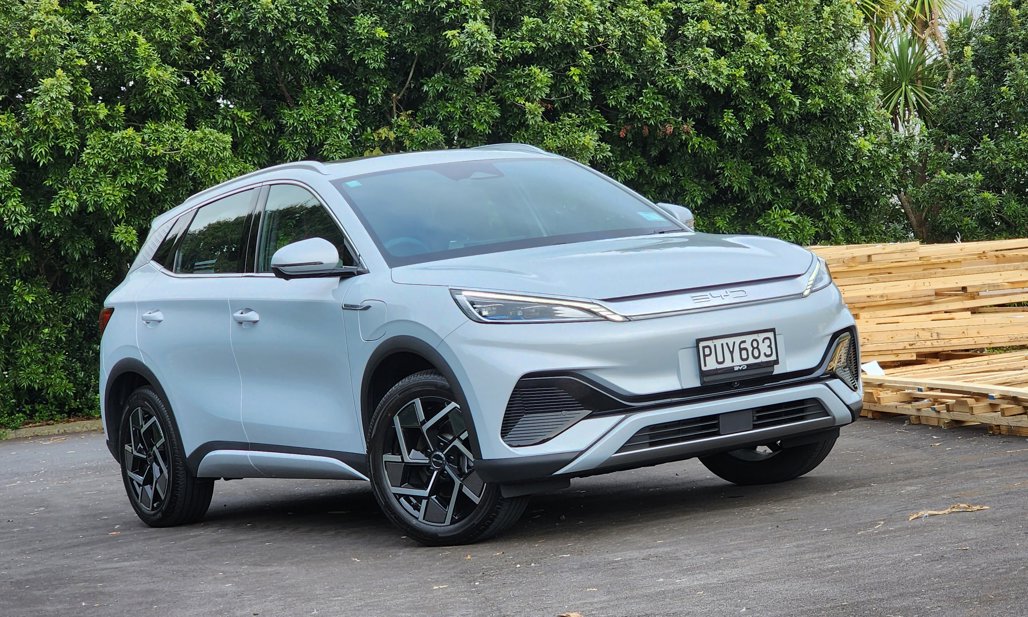
A range number can look calm on a spec sheet and feel nervous on a Friday night drive home. The BYD Atto 3 battery range claims sit around the low-260-mile mark in WLTP markets, yet owners tend to judge the car by a harsher measure: what remains after highway speed, heat, cold, errands, passengers, and a charger that may or may not be free when you arrive. That is the gap buyers care about. For Americans watching BYD from the outside, the Atto 3 is not a normal local showroom choice, since BYD passenger cars have not been widely sold in the U.S. market. Still, it matters because shoppers compare every electric SUV to the same daily test: school runs, Costco trips, I-95 traffic, winter defrost, and weekend miles. A smart EV review should read less like a brochure and more like real ownership advice for modern drivers. The Atto 3 makes sense when you treat its range figure as a best-use guide, not a promise carved into the dashboard.
Battery Range Claims Need a Real-World Translation
The Atto 3’s official range story depends on the market and test cycle. BYD’s European material lists the car at 420 km WLTP combined, while BYD’s Australian page also presents 420 km as a declared WLTP range and warns that real figures can change with load, traffic, and driving style. That lines up with the bigger-battery Atto 3 most reviewers discuss, not every version sold worldwide.
Why WLTP numbers feel optimistic in daily driving
WLTP is not useless. It gives shoppers a shared measuring stick. The problem is that a shared measuring stick is not the same as your commute through rain, hills, and fast traffic.
A U.S. driver should think of WLTP as a calm-weather reference. It often fits mixed driving better than old fantasy-style numbers, but it still cannot know whether you run the heater at 74°F, carry two kids and sports bags, or sit at 72 mph for half the trip. The Atto 3 can be efficient, yet it is still a small SUV pushing air.
Here is the non-obvious part: city driving can make an EV look better than its headline claim. A gas SUV suffers in stop-and-go traffic. An EV often recovers energy during braking and avoids idling losses. So an Atto 3 owner crawling through suburban traffic near Dallas or Phoenix may feel happier than someone running long highway legs across Kansas.
That is why real world EV range should be framed by route type first. A single number hides the car’s best and worst personalities.
What the usable battery tells you before the first test drive
EV Database lists the older Atto 3 with a 60.5 kWh usable battery and estimates 330 km of real range, with a spread from 235 km in cold highway use to 490 km in mild city use. Those figures are not a personal guarantee, but they show the shape of ownership better than a showroom headline.
The useful question is not “Can it hit the claim?” The better question is “How often will your life ask it to?” A driver doing 38 miles a day with home charging may never care if the car misses the full WLTP figure. A driver doing 160 highway miles twice a week will care by the second month.
Battery size also changes how charging feels. A 60.5 kWh usable pack is not tiny, but it is not a road-trip monster either. If you start at 80%, drive fast, use climate control, and avoid dropping below 15%, your practical daily window is much smaller than the full pack suggests.
That smaller window is where BYD Atto 3 ownership becomes real. Owners do not live between 100% and zero. They live between “enough for today” and “I should plug in tonight.”
Where Owners Lose Miles Without Doing Anything Wrong
Range loss often sounds like driver blame. Too fast. Too much heat. Too much air conditioning. Too many short trips. That misses the point. A car is supposed to serve normal life, not demand a perfect lab routine.
Highway speed changes the Atto 3 more than city traffic
The Atto 3’s shape is practical, not slippery like a low sedan. At U.S. highway speeds, air resistance becomes the quiet tax on every mile. You may not feel it through the steering wheel, but the battery feels it.
Take a simple American example. A driver leaves a Chicago suburb in winter, merges onto I-90, sets cruise control near the flow of traffic, and runs the heater. Nothing reckless is happening. Yet this is close to the worst normal use case: dense cold air, steady speed, cabin heat, and few chances for regen to help.
That same driver moving through town at 35 to 45 mph may see the car act far more relaxed. The battery display drops slower. Short stops return a little energy. The cabin reaches temperature and holds it. The car feels honest again.
The counterintuitive lesson is that “range anxiety” is often “speed anxiety” in disguise. The car did not suddenly become worse. The route asked for more energy per mile.
Weather is not a footnote for American buyers
The U.S. makes EV range messy because the climate map is so wide. Minneapolis winter, Miami humidity, Denver altitude, and Arizona heat do not ask the same thing from a battery pack. That matters more than many buyers expect.
The Department of Energy says EV range can drop by up to 32% in freezing temperatures, and it advises preconditioning while plugged in when possible. That helps explain why an Atto 3 can feel stable in mild weather and less predictable during a cold snap.
Hot weather is different. Air conditioning takes energy, but heavy winter heat usually hurts more. The DOE also notes that pre-cooling while plugged in can extend range in hot weather, and setting the A/C less aggressively uses less battery power.
That does not mean you should suffer in the car. Comfort is part of ownership. It means the smartest Atto 3 owner treats climate control as part of the trip plan, the same way gas drivers think about traffic and fuel stops.
For home EV charging setup guide readers, this is where a garage charger changes the whole mood. Preheat or pre-cool before leaving, start with a warm battery, and the car spends less energy fixing the cabin after departure.
Charging Habits Decide Whether the Range Feels Honest
A range claim gets all the attention, but charging rhythm shapes the ownership experience. A car with moderate range can feel easy if charging fits your week. A longer-range EV can feel annoying if you depend on crowded public stations.
The 80 percent habit changes the real number
Many EV owners do not charge to 100% every day. They charge to 80% for routine use, then save full charges for longer drives. That habit is common because it supports battery care and gives room for regen at the top of the pack.
This is where the brochure number shrinks. If the headline says roughly 260 miles in WLTP terms, 80% is not 260 miles. Then subtract a winter buffer, a highway buffer, and the miles you do not want to spend hunting for a charger at the bottom of the pack. Your comfort range may feel closer to a daily operating zone than a full advertised distance.
That is not a defect. It is EV math.
A homeowner in suburban Atlanta who drives 42 miles a day may love the Atto 3 pattern. Plug in twice a week, ignore public charging, and wake up with enough. A renter in Los Angeles who parks on the street may have a different view, even with the same car and the same battery.
That is why BYD Atto 3 ownership should be judged by charging access before brochure range. Home charging turns range into routine. Public-only charging turns range into planning.
Fast charging is useful, but it does not erase planning
The Atto 3 has not been known as a class-leading fast-charging machine. EV Database lists the older model’s maximum DC charging at 89 kW and a 10–80% average around 71 kW, while BYD Europe states a 30–80% charge can take 29 minutes under suitable conditions. Those numbers are workable, not road-trip magic.
For an American driver used to Tesla Supercharger speed or newer 800-volt EVs, that can feel modest. For a driver who mostly charges at home, it may not matter at all.
Here is the hidden ownership truth: charging speed matters most on the days when everything else is already stressful. Rain. Kids. A late hotel check-in. One broken charger. A car that charges fine on paper can feel slow when the stop was not part of your emotional plan.
A realistic Atto 3 road trip would be built around shorter, calmer hops. Stop before the battery gets low. Charge while eating. Skip the macho “drive until 4%” routine. That style is less dramatic and more useful.
For electric SUV ownership checklist planning, the best question is plain: will your normal week need DC fast charging at all? If the answer is no, the Atto 3’s charging limits fade into the background.
How the Atto 3 Compares With U.S. EV Expectations
The Atto 3 sits in a strange place for American readers. It is globally relevant, heavily discussed, and easy to compare online. Yet it is not a regular U.S. dealer option. That gap shapes how Americans should read every claim.
Why American shoppers should compare test cycles with care
The EPA test system is the reference point U.S. buyers know from window stickers. EPA says it defines the methods used for fuel economy estimates on new-vehicle labels, and vehicles are generally tested over five cycles meant to represent typical U.S. driving conditions.
The Atto 3’s global figures are usually framed around WLTP or market-specific claims. That means an American reader should not compare its WLTP number directly with an EPA-rated compact SUV as though both came from the same test room.
The fairer method is to translate the claim into an ownership band. Ask what happens at 70 mph. Ask what happens below freezing. Ask what happens when you use 80% daily charging. Ask what happens after three years of normal battery wear.
This sounds less exciting than a headline range number. It is also how adults buy cars.
The non-obvious comparison is that the Atto 3 may look less impressive against long-range U.S. EVs on road trips, while still looking sensible for daily local use. Many American buyers overbuy range because they fear the rare trip, not because their weekly miles demand it.
What real ownership experience would mean in a U.S. routine
Picture a family in New Jersey with a driveway charger. School drop-off, office commute, grocery run, soccer practice, back home. The Atto 3 would likely feel easy. The range claim would fade because the car keeps returning to the charger overnight.
Now picture a sales rep crossing rural stretches in winter, using public charging between appointments. Same EV. Different life. The range claim would feel thinner because the route gives no mercy.
That is the core lesson. Real world EV range is not one truth. It is a relationship between battery size, speed, weather, charging access, and patience.
For the Atto 3, the ownership sweet spot is local and regional use with home charging. It is not a bad long-distance EV, but it does not beg to be treated like a coast-to-coast machine. The car’s strengths show up when you stop asking it to behave like a larger, pricier American EV.
Electric SUV efficiency also depends on tires, roof accessories, cargo weight, and driving style. A roof box can punish range. Underinflated tires can waste energy quietly. A heavy right foot can make a compact EV drink power like a bigger one.
The better owner learns the car’s patterns. After two weeks, you know what a cold commute costs. After one highway trip, you know whether the estimate is brave or conservative. That lived data beats the brochure every time.
Conclusion
The Atto 3’s range story is not a scandal, and it is not a miracle. It is a normal EV story wearing a clean marketing number. American readers should treat global BYD figures as a starting point, then rebuild them around U.S.-style driving, climate, and charging access.
The smartest takeaway is simple: BYD Atto 3 battery range claims make the most sense when you judge them through your weekly routine, not the longest trip you might take once a year. A home charger, moderate speeds, and mild weather can make the car feel calm and efficient. Cold highway miles and public-only charging can make the same car feel smaller.
That does not make the Atto 3 weak. It makes it honest once you stop asking one number to explain every drive. For anyone comparing compact electric SUVs, the better move is to map your real miles first, then decide whether the car fits the life you already live. Buy the use case, not the brochure.
Frequently Asked Questions
How far can the BYD Atto 3 drive in real life?
Expect the real distance to change with speed, weather, tires, load, and climate control. Mild city driving can come close to the best figures, while cold highway use can cut the number sharply. A home-charging owner will notice the drop less than a road-trip driver.
Is the BYD Atto 3 range good for highway driving?
It can handle highway driving, but steady high speed uses more energy than city routes. Long U.S.-style freeway trips need more planning, especially in cold weather. The car fits regional travel better than frequent long-distance interstate use.
Does cold weather reduce the Atto 3 driving range?
Yes. Cold weather affects battery performance and makes the cabin heater work harder. Preconditioning while plugged in helps because the car starts warm without spending as much battery after departure. Winter owners should keep a wider range buffer.
Is the BYD Atto 3 better for city driving or road trips?
City and suburban use suit it best. Lower speeds, regen braking, and regular home charging help the car feel efficient. Road trips are possible, but charging speed and highway energy use make planning more important than in longer-range EVs.
Should I charge the BYD Atto 3 to 100 percent every day?
Daily 100% charging is usually not needed unless you have a long drive coming. Many EV owners charge to around 80% for routine use and save full charges for trips. Follow the owner’s manual for battery-specific guidance.
Why does the dashboard range estimate change so much?
The estimate reacts to recent driving, climate use, speed, and conditions. A slow city drive may raise confidence, while fast highway miles can make the number fall faster. Treat it as a live guess, not a fixed promise.
Is the BYD Atto 3 sold in the United States?
BYD passenger cars have not been widely sold through normal U.S. retail channels. American shoppers may still compare the Atto 3 online because BYD is a major global EV brand, but local availability, service, warranty, and parts support matter.
What is the best way to get more range from an Atto 3?
Drive at moderate speeds, keep tires properly inflated, remove roof cargo when not needed, and preheat or pre-cool while plugged in. Smooth driving helps, but charging access matters more. A home charger makes the ownership experience far easier.
